
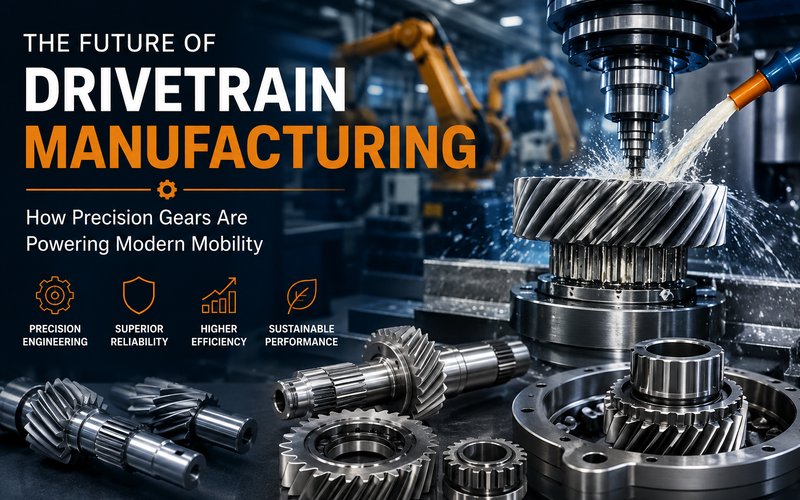
The automotive and industrial sectors are evolving rapidly. Electric vehicles, advanced agricultural machinery, smart manufacturing systems, and heavy construction equipment are transforming industries worldwide. At the heart of these innovations lies one critical component: the drivetrain.
A drivetrain transfers power from an engine or motor to the wheels or working mechanism of a machine. Whether it is a passenger vehicle, commercial truck, tractor, or industrial machine, drivetrain performance directly affects efficiency, durability, fuel economy, and reliability.
As industries demand better performance and greater efficiency, precision-engineered gears and transmission components have become more important than ever.
Understanding the Importance of Drivetrain Components
A drivetrain consists of several components working together to transfer power efficiently. These components must withstand heavy loads, continuous operation, and challenging working conditions.
Key drivetrain components include:
- Transmission gears
- Gear shafts
- Differential assemblies
- Shifter components
- Power transmission systems
- Precision-machined forgings and castings
The reliability of these components determines the overall performance of the machinery they support. Even small manufacturing inaccuracies can lead to vibration, excessive wear, reduced efficiency, and increased maintenance costs.
The Rise of Precision Manufacturing
Modern mobility solutions require components manufactured with exceptional accuracy. Precision engineering ensures every gear tooth, shaft dimension, and transmission component meets strict quality standards.
Benefits of precision manufacturing include:
- High load-bearing capacity
- Improved operational efficiency
- Longer service life
- Reduced noise and vibration
- Enhanced safety and reliability
- Consistent performance under demanding conditions
Achieving these standards requires advanced manufacturing processes, robust quality systems, and continuous technological innovation.
Technologies Transforming Drivetrain Manufacturing
The manufacturing industry is adopting advanced technologies to improve precision, productivity, and scalability.
CNC Machining
Computer Numerical Control (CNC) machines produce highly accurate components with repeatable precision. This technology minimizes variations and ensures consistent quality.
Gear Hobbing and Shaping
Advanced gear-cutting techniques create complex gear profiles that improve performance while reducing friction and wear.
Automated Quality Inspection
Modern inspection systems use precision measuring equipment and digital monitoring tools to identify even the smallest deviations from specifications.
Digital Manufacturing Systems
Industry 4.0 technologies enable real-time production monitoring, process optimization, and data-driven quality control, helping manufacturers improve productivity and reduce defects.
Applications Across Multiple Industries
Although drivetrain systems are commonly associated with automobiles, their applications extend across various industries.
Automotive Industry
Passenger and commercial vehicles rely on precision transmission systems for improved fuel efficiency, smoother operation, and longer vehicle life.
Agricultural Equipment
Modern tractors and farming machinery require durable drivetrain systems capable of handling high torque and continuous operation.
Construction Machinery
Excavators, loaders, cranes, and heavy-duty equipment depend on robust gears and shafts designed to withstand harsh operating environments.
Industrial Machinery
Manufacturing plants, power generation systems, and material handling equipment rely on precision transmission components to maintain uninterrupted operations.
Meeting Global OEM Expectations
Today's OEMs expect more than just component suppliers. They seek manufacturing partners who can consistently deliver quality, innovation, and scalability.
Leading manufacturers focus on:
- Stringent quality control systems
- Advanced inspection technologies
- Process standardization
- Continuous improvement initiatives
- Global quality certifications
- Customer-focused engineering solutions
These capabilities help build long-term partnerships and support innovation across industries.
Sustainability Through Engineering Excellence
As industries focus on sustainability and energy efficiency, drivetrain performance plays a crucial role in reducing energy consumption and operational costs.
Precision-engineered components contribute by:
- Reducing mechanical losses
- Improving fuel efficiency
- Extending equipment lifespan
- Lowering maintenance requirements
- Minimizing material waste
These advantages make precision manufacturing an important contributor to sustainable industrial growth.
The Future of Mobility and Manufacturing
The future of mobility will be shaped by innovation, electrification, automation, and smart manufacturing. As vehicles and machinery become increasingly sophisticated, the demand for high-performance drivetrain components will continue to rise.
Manufacturers that invest in advanced production technologies, engineering expertise, and quality excellence will play a vital role in supporting the next generation of mobility solutions.
Precision gears, transmission components, and drivetrain systems may operate behind the scenes, but they remain fundamental to the performance, reliability, and efficiency of modern machinery. Their importance will only grow as industries embrace the technologies of tomorrow.